
AI infrastructure in Singapore.
Singapore is Southeast Asia's connectivity hub and one of the most deliberately managed data centre markets anywhere. Capacity here is allocated rather than simply built, which makes it genuinely scarce.
The constraints that decide a deployment here.
Managed growth is the defining feature.
Singapore paused new data centre development for a period and now runs growth under a sustainability-led framework that allocates capacity against efficiency criteria. That is rational national policy for a small, land-constrained country, and for buyers it means Singapore capacity is genuinely scarce rather than merely tight.
The consequence is straightforward: capacity here is not advertised so much as awarded, and the operators holding it choose their tenants. Arriving with a clean requirement and a credible counterparty file matters more here than in markets where floor space is competing for you.
What Singapore offers in return is connectivity nowhere else in the region matches, which is why latency-sensitive regional inference keeps paying the premium.
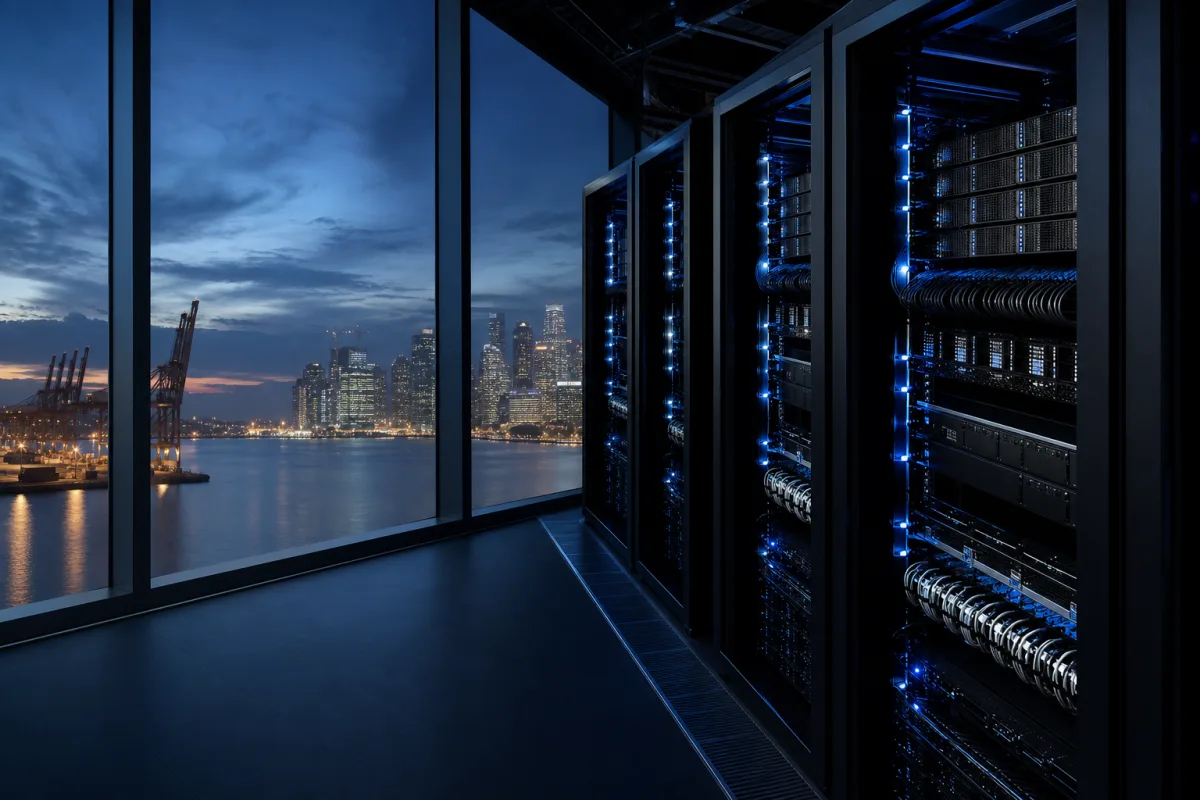
Anchor here, scale nearby.
The design we run for most Southeast Asian requirements: keep the latency-critical inference layer in Singapore where the network is, and place sustained training capacity in nearby markets with better availability and power economics, connected privately. The wider region has absorbed a great deal of the demand Singapore cannot physically take.
That is not a downgrade. For most workloads it delivers more compute for the same money while preserving the latency that made Singapore attractive in the first place. The regional picture is on the APAC desk.
Whatever the placement, destination and end-user screening runs before commercial terms, which in this region is what keeps allocation reachable at all.
Start from what is verified.
Current verified lines with quantities, lead times and indicative pricing are public on the live inventory. Anything not listed becomes a sourcing requirement with a first pass inside one business day.
Asked first, answered straight.
Because growth is deliberately managed under sustainability policy in a land and power constrained country. Capacity is allocated against efficiency criteria rather than simply built, so operators choose their tenants.
Sometimes, for the right requirement, and we will tell you honestly when the answer is no. Where it is no, nearby regional alternatives with Singapore connectivity usually deliver the same outcome at better availability.
Nearby markets connected privately back to Singapore for the latency-sensitive layer. It is a common design and for most workloads it delivers more compute per dollar than forcing everything into the constrained hub.
For GST-registered businesses, generally yes through the standard mechanism, provided the entry paperwork is correct. We structure the import so it is a timing question rather than a cost.
Working through this on a real requirement?
Twenty minutes with the desk, no pitch and no quote at the end of it. Tell us roughly what you need and we will come back within one business day.
Sent. We are on it.
Your enquiry has landed with the desk. Acknowledged within one hour.