
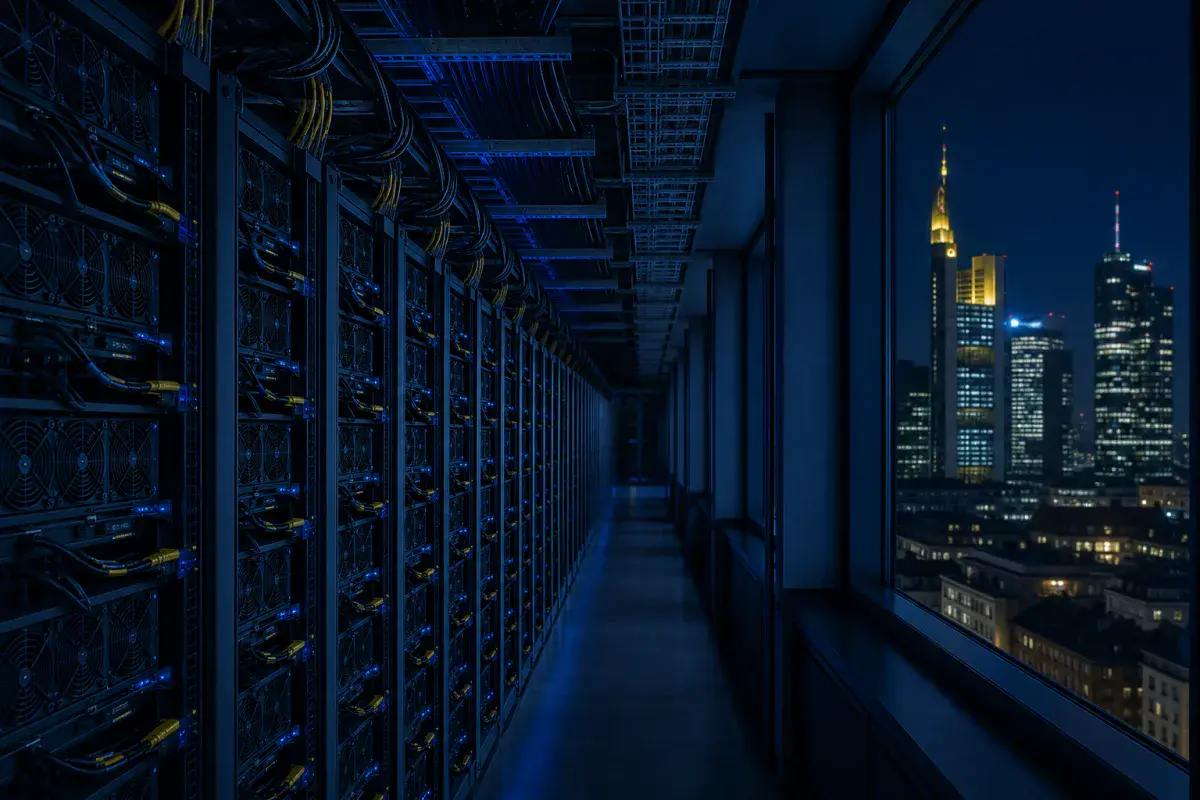
Density is the single fact that decides your shortlist. An 8-GPU B300 node draws roughly 14 kW all in. Four of them in a rack is 56 kW, which already puts you outside what a large share of enterprise colocation was built to deliver or cool.
What it costs, by density
North American wholesale colocation averaged about $196 per kW per month in the second half of 2025, and committed deals sit roughly between $130 and $225 per kW. Retail high-density racks in the 10 to 30 kW band are quoted at about $3,000 to $6,000 a month before bandwidth and cross-connects, and genuine AI-density racks run $4,000 to $8,000 and up plus separate power circuit charges.
Geography moves this more than anything else on the page. Atlanta is among the cheapest major US markets, Silicon Valley among the most expensive, and Singapore runs roughly $330 to $475 per kW per month, which is more than double the North American average.
The three thresholds that matter
Around 40 kW per rack, air cooling with contained aisles stops being straightforward and rear-door heat exchangers enter the conversation. Around 80 to 100 kW, direct-to-chip liquid becomes the practical answer rather than an option. Past 120 kW, which is where GB300 NVL72 racks live, liquid is mandatory and the number of halls that can take you globally is small enough to name.
Each threshold cuts the shortlist hard. A requirement that fits under the first one can be placed almost anywhere. A requirement past the third is a build-to-suit conversation more often than a colocation one.
What a hall has to prove
Deliverable power at your density today, not on a roadmap. Cooling that matches the hardware you are actually buying. Redundancy at N, N plus 1 or 2N, and what that costs at your draw. A commissioning date you can hold them to, and what happens commercially if they miss it.
Ask for the single-line diagram and the current utilisation of the hall you would sit in. Operators with headroom answer immediately. The ones that hesitate are selling you a plan.
Why buyers get this wrong
They shop hardware first and place it second. By the time the nodes are ordered, the density is fixed, and the facility shortlist has already been decided for them by a spec sheet they never looked at that way.
Settle the density question first and the rest of the procurement gets easier, because you are no longer negotiating with halls that were never going to work.
We source space and power alongside the compute rather than after it, which is the only order that avoids this. Requirements come to the desk as three numbers: megawatts at day one, kilowatts per rack, and the date. Start at colocation and power, or price the hardware first on the live inventory.