
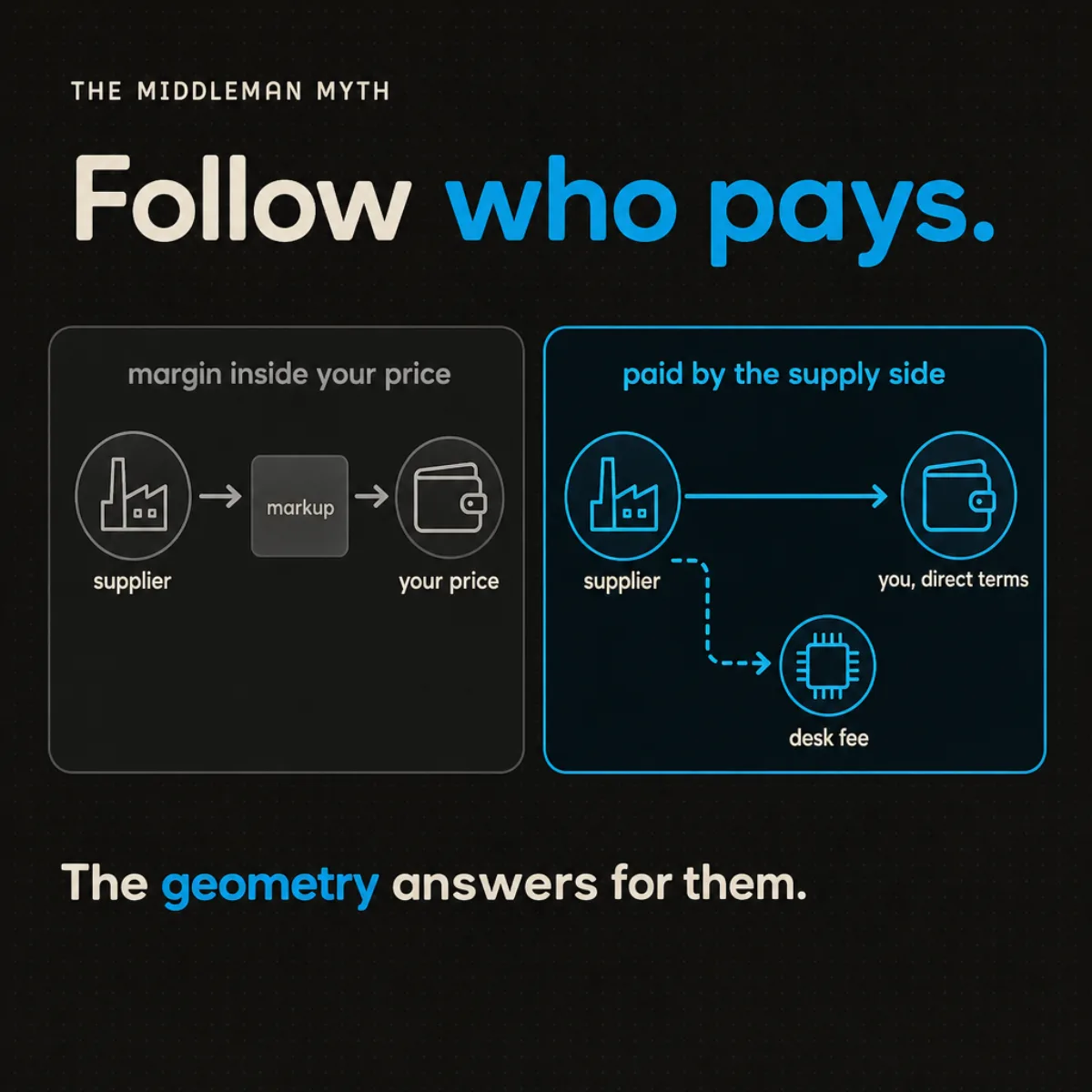
Two geometries, same word
Call them desks, resellers, advisors, channels: the label tells you nothing. The geometry tells you everything. There are exactly two.
Geometry one: the margin lives inside your price. The intermediary buys, marks up, sells to you, or takes a cut priced into your number. Nothing inherently evil about it; retail works this way. But understand what it does to advice: every conversation with this party is a negotiation, including the ones dressed as guidance. Their income rises when your price does. They can be charming, competent and genuinely useful, and they cannot be on your side, structurally.
Geometry two: compensation comes from the supply side, disclosed. The buyer transacts on the supplier's direct terms; the intermediary is paid by the supply side for delivering qualified, verified demand. Now the incentive points somewhere else: the desk profits from deals that complete and buyers who come back, not from the spread on any one number. Which is what makes it structurally possible, for the first time, to tell a buyer that a SKU is wrong for them.
Why suppliers fund geometry two at all
Fair question: what is the supply side buying? Qualified demand is genuinely expensive to find. A desk that arrives with verified end users, clean compliance files and deals that close is worth paying for, because the alternative is a sales pipeline full of tyre-kickers and export risk. The supply side pays for certainty. The buyer gets representation. That is the whole model, and it only works if the desk protects its verification standards, which is exactly the incentive you want it to have.
Do not ask an intermediary if they add value; everyone says yes. Ask who pays them and where the margin sits. The geometry answers for them.
The honest caveats
- Geometry two is not sainthood. A supply-side-paid desk still has incentives: to close deals, to favour suppliers who work with it. Disclosure is what keeps it honest; insist on it.
- Geometry one is not always wrong. For small, standard, urgent purchases, a reseller with stock on the shelf is exactly what you want. The geometry matters most when the deal is large, structured and long.
- Anyone can claim either geometry. The test is written disclosure of how they are paid, and whether the supplier relationship survives you asking. Vague answers are an answer.
Why I am writing this
Obviously we run geometry two, so discount accordingly. But the test itself is neutral and it costs you one question. In a market this opaque, one question that reliably sorts the room is worth more than any quote.
Running the test in one email
Here is the whole diligence, executable today. Write to whichever intermediary you are evaluating and ask three things in plain words: how are you paid on my deal, does any part of your compensation sit inside my price, and will you disclose the arrangement in writing? Then watch the shape of the reply rather than its charm. A clean geometry answers in two sentences, because the answer is simple and they have given it before. A conflicted geometry produces paragraphs, reframes the question as unusual, or explains why the industry does not work that way. Length of answer is inversely proportional to cleanliness of model; I have never once seen the rule fail.
Then verify the claim against behaviour over the first month. A desk paid from the supply side should, at some point, tell you something against its own apparent interest: this SKU is wrong for you, this term is too long, this quote is fine, do not pay us more attention. If every recommendation happens to point at the biggest deal, the geometry on the letterhead is not the geometry in operation.
Whoever you end up working with, us or anyone, keep the question alive for the life of the relationship. Incentives drift, and disclosure is not a one-time event. The buyers who stay represented are the ones who keep checking the geometry, politely, forever.