
Two prices, one product
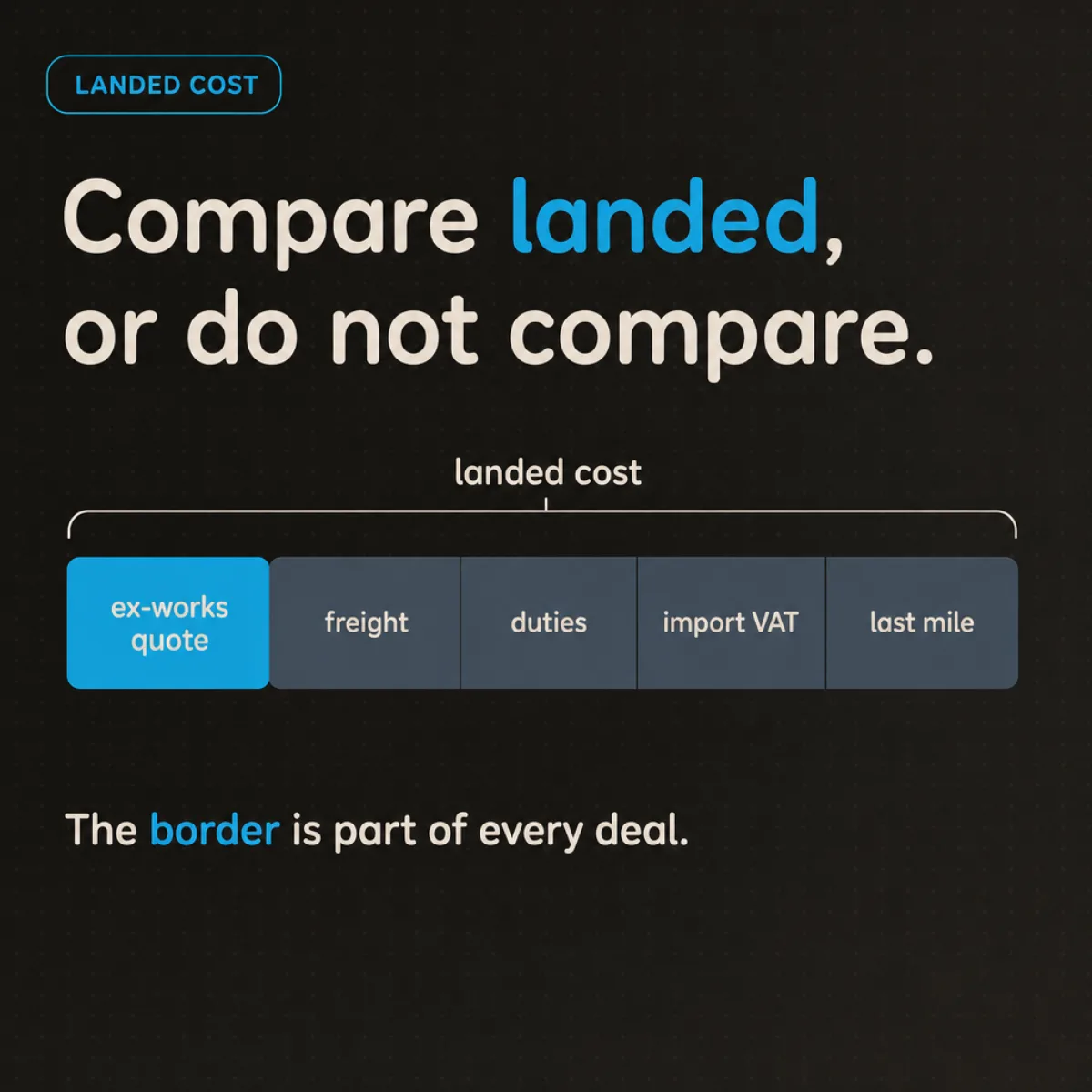
An ex-works quote is a price at the supplier's door. Between that door and your rack sit freight and insurance at server weights, export screening on the way out, customs classification and duties on the way in, import VAT or GST, and the physical last mile into a facility. Add them up and you have the landed cost, which is the only number a comparison can honestly be built on.
On a multi-node order these layers are not rounding errors. They routinely move totals by enough to flip which supplier is actually cheaper, which is why comparing ex-works quotes is comparing fiction.
The layers, in the order they bite
- Export screening. Advanced GPUs are controlled goods; end users and destinations are verified before anything ships. Done early it costs days. Discovered late it costs the schedule, and occasionally the deal.
- Freight and insurance. GPU nodes are heavy, dense and shock-sensitive, all at once. Proper packing, tracking and insurance are not gold-plating; a dropped pallet of HGX nodes is a seven-figure event.
- Classification and duties. The tariff line the hardware enters under decides what the border charges. Getting classification right the first time is cheaper than arguing about it afterwards.
- Import VAT and GST. In most jurisdictions this is recoverable through standard credit mechanics, provided the entry paperwork is right. Structured well it is cash-flow timing; structured badly it is a cost.
- Importer of record. If you hold no import capability in the destination, someone must formally stand as the importer and carry the obligations. This service is the difference between a two-week clearance and a two-month one in a surprising number of countries.
Compare landed numbers or do not compare at all. The border is part of every international deal, whether or not it appears on the quote.
The easy jurisdiction and the tricky one
The same shipment can be routine into one country and a project into its neighbour: different duty treatment, different import licensing, different attitudes at the border. This is why "can you deliver to X?" never has a one-word answer from anyone honest. The honest answer names the route, the documents and the weeks, and prices them into the deal at the start.
Buyers who insist on that answer up front stop being surprised. Everyone else pays retail for surprise, which is the most expensive product in logistics.
The one-sheet habit
The protective habit is almost embarrassingly simple: refuse to evaluate any international quote until it is expressed landed. Ask the seller to complete the sheet: hardware, freight, insurance, duties at the named tariff line, import VAT or GST and its recovery treatment, importer-of-record if needed, delivery to the named facility. A seller who completes it quickly has landed hardware before, and their number is real. A seller who resists is telling you where their margin lives, and whose problem the border is about to become.
Run recovery properly and the picture improves further: much of what the border charges is timing rather than cost, provided the entry paperwork is right the first time. Structured well, import VAT flows back through the standard credits; structured badly, it quietly becomes part of what you paid. The difference is entirely in the preparation, which is why the boring parties keep winning this market.
And for the schedule: put the border on the critical path from day one. Screening, classification and clearance have their own clocks, and they do not care about your launch date. Deals that treat the border as an afterthought discover it is actually a gate; deals that plan it walk through.