
AI infrastructure in Canada.
Canada pairs abundant hydroelectric power with a climate that does a meaningful share of the cooling for free. For sustained training workloads with a North American footprint, it is frequently the cheapest correct answer.
The constraints that decide a deployment here.
Hydro plus climate is a durable advantage.
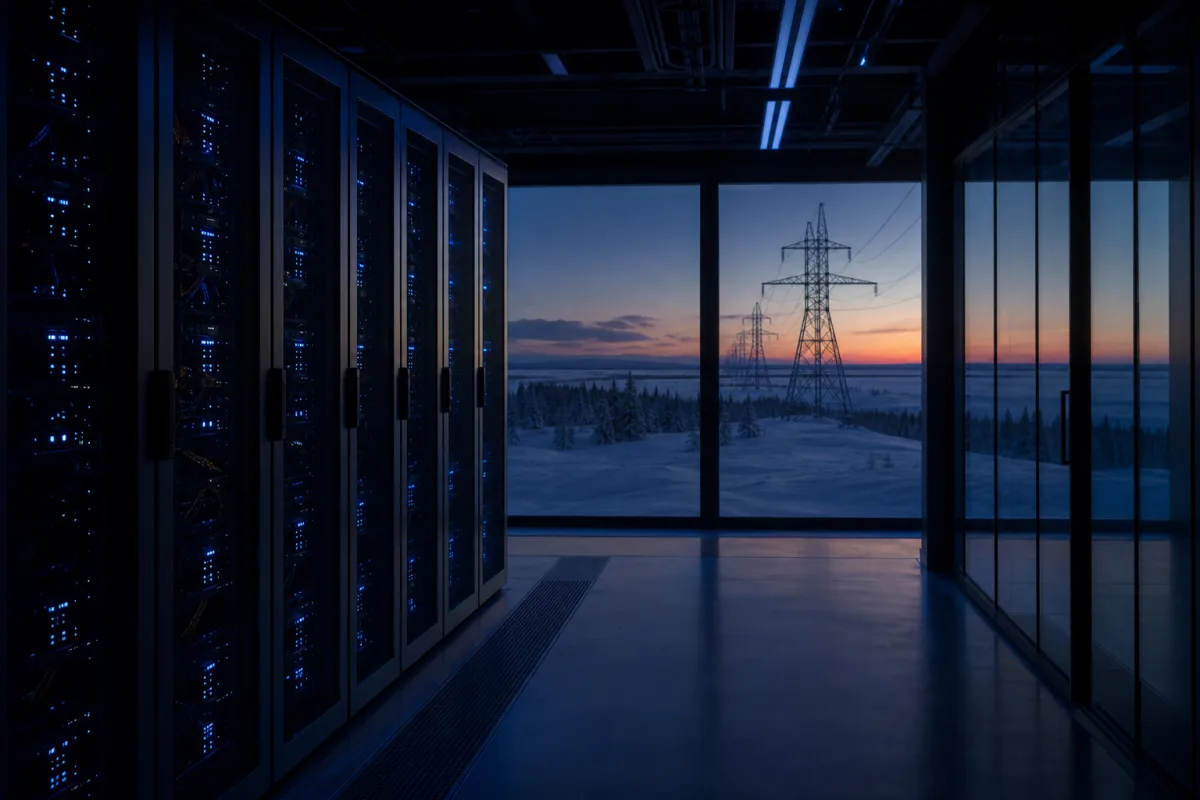
Quebec, British Columbia and Manitoba generate very large volumes of hydroelectric power, and industrial rates in parts of the country are among the lowest in the developed world. Layered on top, cold ambient temperatures reduce mechanical cooling load for a significant part of the year, which shows up directly in effective PUE and therefore in the bill.
For a sustained training cluster, where power is the largest lifetime cost, that combination is worth more than any hardware discount available in the market. It is why Canadian capacity keeps attracting workloads that could physically run anywhere.
The hardware itself typically arrives from US stock, which is a short and familiar freight leg. There is still a customs entry, so we price the landed number rather than quoting ex-works.
Some Canadian data genuinely cannot leave.
Federal and provincial privacy regimes, and sector-specific rules in public services and health, mean a meaningful class of Canadian workloads must stay in-country. Where that applies, we name the facility, the operator and the jurisdiction before commercial terms rather than discovering the constraint during procurement.
Where residency does not bind, Canada still often wins on economics alone, which is an unusual and pleasant position for a buyer to be in. We price it against US placement so the comparison is explicit.
For the cross-border leg, freight, customs classification and duty treatment are handled by the same desk and quoted landed. The mechanics are on the import and IOR desk.
Start from what is verified.
Current verified lines with quantities, lead times and indicative pricing are public on the live inventory. Anything not listed becomes a sourcing requirement with a first pass inside one business day.
Asked first, answered straight.
On power, frequently yes, particularly in the hydro provinces, and cold-climate cooling adds to that. Hardware pricing is similar since most stock originates in the US, so the difference shows up over the life of the cluster rather than at purchase.
It is a short and familiar leg, but it is still a customs entry with classification and duty treatment. We handle it and quote the landed cost so the comparison against a US deployment is honest.
Quebec, British Columbia and Manitoba lead on power economics. The right answer also depends on latency to your users and whether provincial residency rules apply to your data.
It depends on your sector and the data. Public sector, health and some financial workloads face genuine in-country requirements. We treat that as the starting constraint and name qualifying facilities before pricing hardware.
Working through this on a real requirement?
Twenty minutes with the desk, no pitch and no quote at the end of it. Tell us roughly what you need and we will come back within one business day.
Sent. We are on it.
Your enquiry has landed with the desk. Acknowledged within one hour.